Post-Hospital Discharge Care: Transitioning Safely from Hospital to Home in Lucknow
1. Securing a Comprehensive Hospital Discharge Summary
Before leaving the hospital in Lucknow, ensure you have received a detailed, physician-signed discharge summary. It should clearly outline the primary diagnosis, hospital course, prescribed medications with exact dosages, wound care instructions, dietary specifications, and emergency warning signs.
2. Preparing the Home Recovery Environment
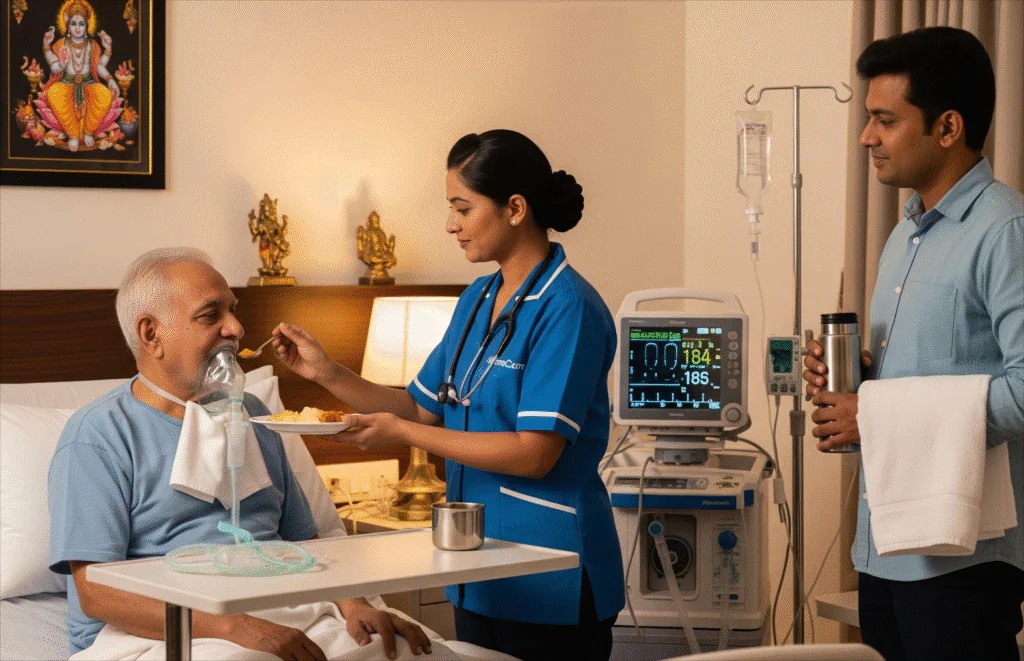
A designated recovery room should be well-ventilated, hygienic, and free of physical hazards. For semi-dependent or bedridden patients, ensure appropriate bedding—such as a motorized hospital bed with an alternating pressure ripple mattress to prevent decubitus ulcers (bedsores). Keep suction apparatus, oxygen cylinders or concentrators, and emergency medical kits within easy reach.
3. Medication Management & Nursing Reconciliation
Discharge medication schedules often differ significantly from pre-admission routines. A qualified home nurse reviews discharge prescriptions, organizes a medication administration record (MAR), and monitors for adverse reactions, drug interactions, and vital sign deviations.
4. Vitals Monitoring and Clinical Red Flags
Establish a regular vitals monitoring chart recording temperature, blood pressure, pulse rate, oxygen saturation (SpO2), and blood sugar levels. Knowing the threshold triggers for immediate hospital escalation or physician consultation prevents preventable complications and readmissions.
5. Coordinated Physical Therapy and Nutrition
Prolonged bed rest results in rapid muscle deconditioning and joint stiffness. Coordinated bed-mobility exercises, chest physiotherapy, and tailored nutritional support (including Ryle’s tube feeds when indicated) significantly accelerate functional recovery in the comfort of home.

Super Administrator
Care Coordination Desk, Lucknow
Prepared and verified for family healthcare planning in Lucknow. For clinical support or caregiver availability, speak with our local team.